Class B vs Class C Camper Van: Which is Right for You?
So you’ve decided to buy a camper van. You’ve been down the rabbit hole, YouTube walkthroughs at midnight, spreadsheets comparing floor plans, forum threads that somehow led you to a debate about composting toilets. And somewhere in the middle of all that research, you hit a question that stops a lot of buyers in their tracks:
Class B or Class C?
They’re both RVs. They both let you sleep somewhere that isn’t a tent. But beyond that, they’re genuinely different vehicles with different strengths and the wrong choice can mean years of frustration on the road. The right choice, though, can be life-changing.
Here’s how to tell them apart, and how to figure out which one belongs in your driveway.
What is a Class B camper van?
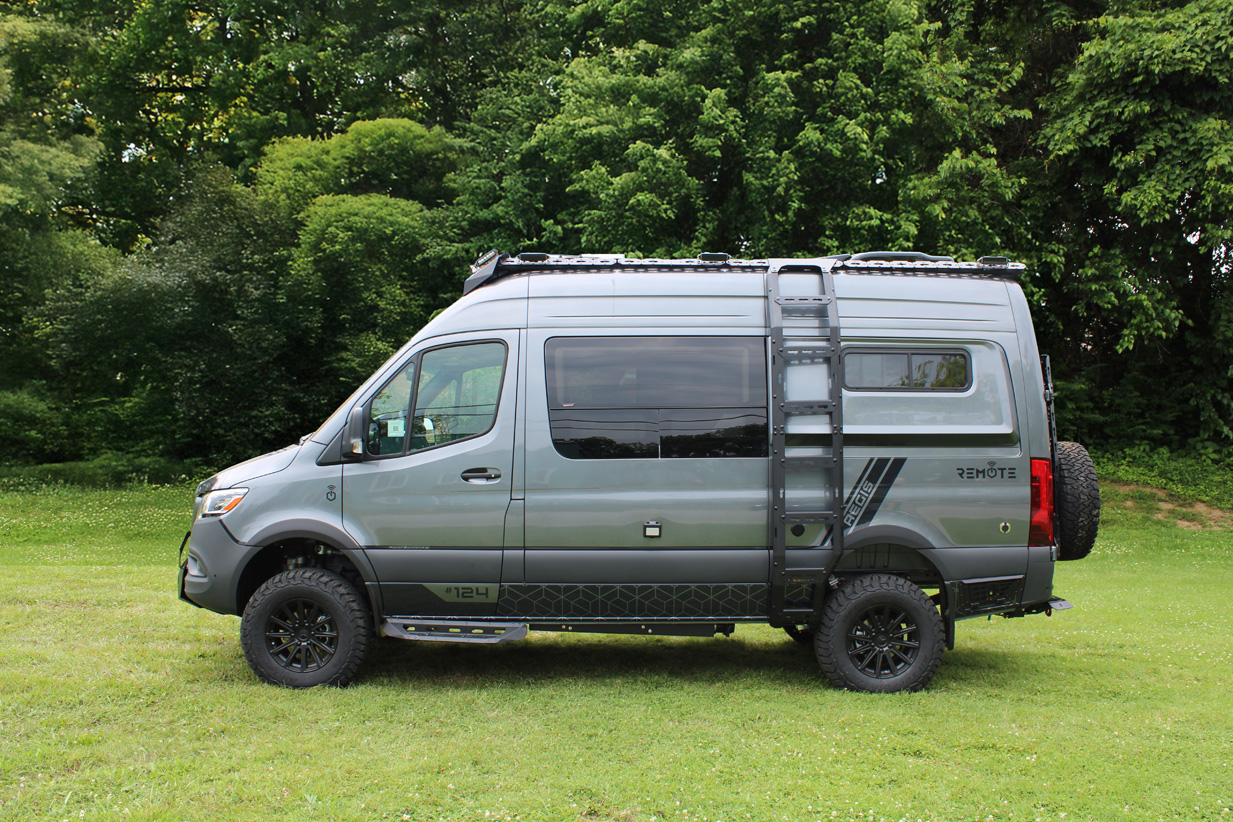
A Class B RV, also called a camper van, is built on a full-size cargo van chassis. The most common base vehicles are the Mercedes-Benz Sprinter, Ford Transit, and Ram ProMaster. The conversion company takes that van and transforms the interior: adding sleeping quarters, a kitchen, climate control, solar power systems, a wet bath or wet room, and everything else you need to live and travel independently.
The result is a vehicle that looks, from the outside, roughly like a tall cargo van but opens up into a remarkably capable home-on-wheels. Class B vans typically range from 19 to 24 feet in length and can sleep two adults comfortably.
Key characteristics of Class B camper vans:
- *Length: 19–24 feet
- *Sleeps: 1–2 people (occasionally 3–4 with creative layouts)
- *Drives like: a large van or truck i.e. no special license required
- *Built on: Mercedes Sprinter, Ford Transit, or Ram ProMaster chassis
- *Fuel: diesel or gasoline depending on chassis
- *Price range: $80,000–$250,000+ for a professionally built conversion
What is a Class C RV?
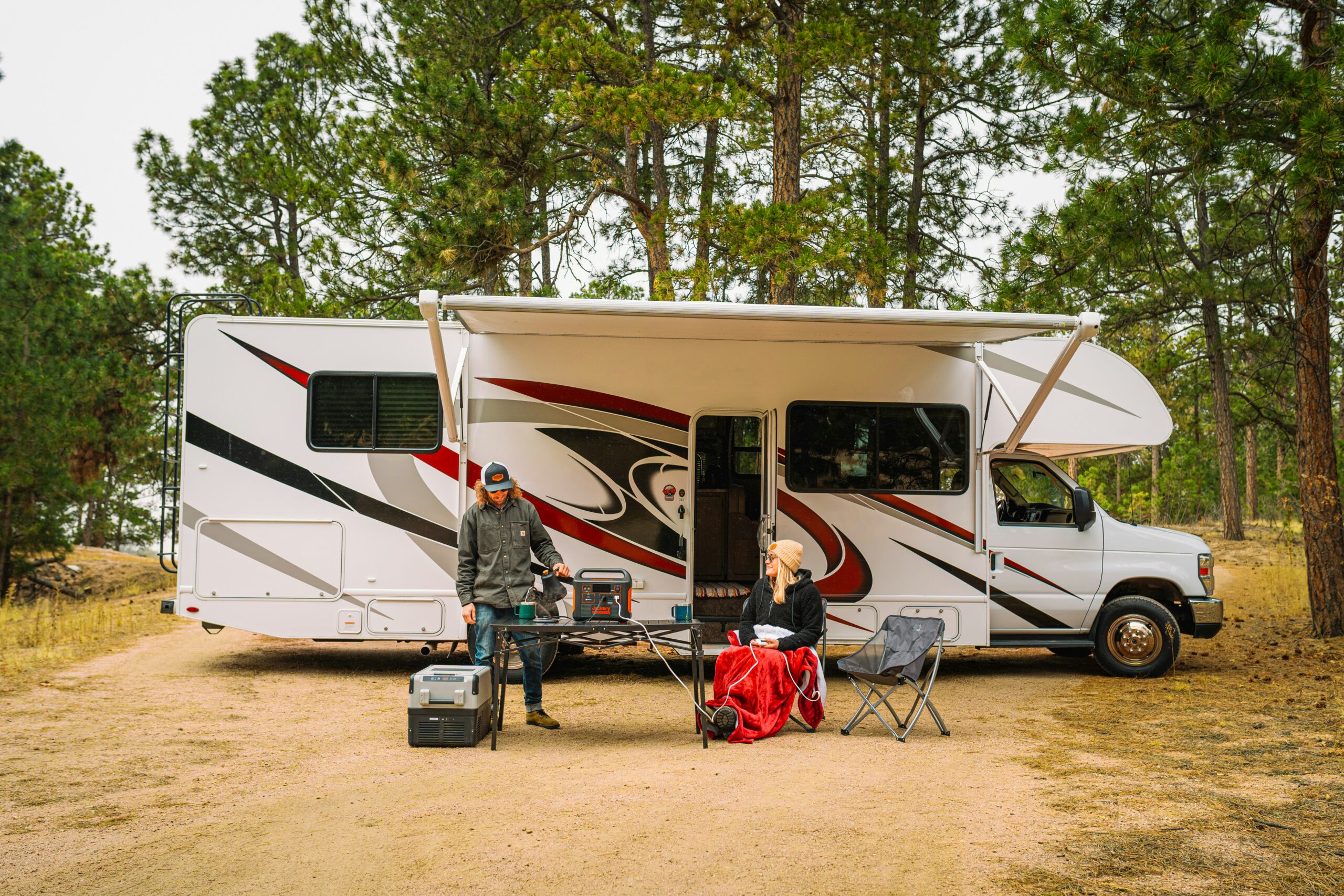
A Class C RV is built on a cutaway truck or van chassis — typically a Ford E-Series, Ram 3500, or Mercedes Sprinter — and has a habitation body built directly onto it. You’ll recognise them immediately by the over-cab sleeping area that extends above the driver’s cab.
Class C RVs are larger than Class B vans and offer more living space, but they come with tradeoffs in manoeuvrability, fuel efficiency, and campsite access.
Key characteristics of Class C RVs:
- *Length: 20–33 feet
- *Sleeps: 4–8 people depending on layout
- *Drives like: a large box truck. It takes practice, especially in tight spaces
- *Built on: cutaway chassis like Ford E-450, Ram 3500, Sprinter 3500
- *Price range: $70,000–$180,000 new
Class B vs Class C Camper Van: Side-by-side comparison
| Feature | Class B (Camper Van) | Class C RV |
|---|---|---|
| Length | 19–24 ft | 20–33 ft |
| Sleeps | 1–2 adults | 4–8 people |
| Drives like | Large van: easy to drive | Box truck: needs practice |
| City parking | Standard parking spaces | Difficult: needs large lots |
| Fuel economy | 18–25 MPG (diesel Sprinter) | 8–14 MPG |
| Off-road access | Good: fits forest roads, tight trails | Limited: length restricts access |
| Living space | Compact but efficient | More floor space, separate areas |
| Stealth camping | Excellent: looks like a work van | Not possible |
| Remote work capability | Purpose-built options available | Limited built-in tech/power options |
| Maintenance | Standard van servicing:widely available | Specialist RV centres required |

Who should choose a Class B camper van?
Class B vans are the right choice for a specific and growing type of traveller. If you identify with any of these, a Class B is almost certainly your vehicle:
You’re travelling as a couple or solo
The honest truth is that two adults can live full-time in a well-designed Class B van with remarkable comfort. Purpose-built vans like the Remote Vans Oasis and Aegis have fixed king beds, collapsable shower, full kitchen functionality, and dedicated workspace: everything a couple needs, designed to eliminate wasted space. If you’re not regularly travelling with children or groups of four or more, a Class B is more than sufficient.
You want to drive every day
One of the most underappreciated advantages of a Class B is how easy it is to move. You can drive into a city, park in a regular street space, run errands, and park again, without the stress that comes with a 30-foot rig. Full-time van lifers who are genuinely mobile (not just parked at a campground for weeks at a time) overwhelmingly prefer Class B for this reason.
You work remotely
Premium Class B vans have evolved significantly on this front. Connectivity systems, lithium battery banks, high-wattage solar, and dedicated desk areas make modern adventure vans genuinely capable mobile offices. If you need to take video calls from a mountain pass or file work from a desert boondocking spot, a Class B with serious connectivity specs is the tool for that, a Class C generally is not.
You want off-grid independence
Class B vans fit where Class C RVs simply cannot go, forest service roads, Bureau of Land Management land, backcountry campsites. If boondocking is part of your vision, the Class B’s size and off-road capability give you access to a far wider range of locations.
Remote Vans builds four Class B adventure van series: the T-45, Friday, Oasis, and Aegis. Each van is designed for different travel styles and budgets. All four are RVIA certified, Sprinter-based, and built for four-season use.
Who should choose a Class C RV?
Class C RVs aren’t the wrong choice, they’re just the right choice for different people and different trips.
- *You’re regularly travelling with kids or a larger family who need separate sleeping areas and more floor space to move around.
- *You spend most of your time at established campgrounds with hookups, where the Class C’s larger water tanks, AC unit, and generator make sense.
- *Your trips are destination-based rather than on-the-move, you drive to a national park, park for 2-3 weeks, and explore from there.
- *You want to spread out in the evening, cook proper meals at a full-size range, and sit at a dinette. The extra space of a Class C makes this more comfortable.
The question most buyers don’t ask:
The most useful test isn’t about features, it’s about behaviour. Think about what your van life week actually looks like in practice:
- *Do you move every day or two, or do you stay in one place for several days? Daily movers almost always prefer Class B.
- *Do you work from the road, or is this purely for leisure? Workers lean Class B for the tech and connectivity.
- *Will you ever need to park in a city, a parking garage, or along a regular street? If yes, Class B is the only option.
- *Are you travelling with pets? A Class B offers better climate control at idle and easier access for dogs.
- *Do you care about stealth? The ability to park overnight without announcing you’re sleeping in your vehicle? Class B is virtually undetectable.
If your answers lean toward mobile, minimalist, and independent, a Class B van is almost certainly the right call.
What about price?
Is a Class B more expensive than a Class C?
Entry-level Class C RVs can be purchased new for $70,000–$100,000, which makes them appear more affordable than premium Class B adventure vans that start around $175,000. But this comparison isn’t quite apples-to-apples.
A budget Class C is a very different product from a premium Class B. The higher price of a purpose-built Class B adventure van reflects the quality of the Sprinter chassis, the engineering that goes into the power systems, insulation, and build, and the long-term reliability that comes from RVIA-certified construction.
Over a 5–10 year ownership period, the higher resale value of premium Class B vans and lower per-mile operating costs (particularly for diesel Sprinters) often closes the gap considerably. And with 20-year RV financing now widely available through dealer partners, monthly payments on a premium Class B can be surprisingly manageable.
So which is right for you?
If you’re a couple, a solo traveller, a remote worker, or anyone who values mobility, flexibility, and access over raw floor space, a Class B camper van is almost certainly the better choice for you.
If you’re regularly travelling with a family of four or more, spending long stretches at established campgrounds, or prioritising living space over driveability, a Class C deserves a serious look.
Most of the people who walk into a Remote Vans dealer have already made their decision before they arrive. They’ve done the research, they’ve watched the walkthroughs, and they know a Class B is their vehicle. What they’re deciding is which Class B … and that’s a much more enjoyable problem to have.
Are you Ready?
Ready to explore the Remote Vans lineup? Compare all four series side by side, or complete a van inquiry and we’ll connect you with your nearest dealer.