The Adventure Van Buying Guide: Everything You Need to Know Before You Buy
There is a moment in the research process that serious van buyers all seem to describe in the same way. You have watched the walkthroughs, read the forums, and built the spreadsheet. You know more about amp-hours and suspension travel than you ever expected to. And then you walk into a dealership, or pull up a brand’s website, and you realise that most of what is out there is written to impress you rather than inform you.
This guide is written to inform you.
It is for the buyer who is genuinely researching this decision, not just daydreaming about it. The person who wants to understand what the specs actually mean in daily use, how to evaluate the real differences between brands, and how to walk into any dealership, including a Remote Vans dealer, is prepared to ask the right questions and know a good answer from a rehearsed one.
We will cover the full picture: what makes a Class B different from other RVs, the four systems that actually determine long-term satisfaction, how to match a van to the way you actually travel, what financing looks like in practice, and the seven questions worth asking before you sign anything.
One more thing before we start. Remote Vans publishes The Complete Class B Camper Van Buyer’s Guide, a free download that goes even deeper, with the full 2026 series comparison table, real financing examples, and detailed specs. It is worth downloading before you visit a dealer. The link is at the bottom of this page.
Why Class B vans have become the serious traveller’s choice
The RV industry has a lot of categories. Class A motorcoaches. Class C rigs with the cab-over sleeping area. Fifth wheels and travel trailers that need a purpose-built tow vehicle. Pull-behind teardrops. All of them have their place.
But something has shifted in the last several years. A specific type of buyer has decided that none of those categories quite fits what they want, and they have landed on Class B, the compact, self-contained van conversion built on a full-size van chassis.
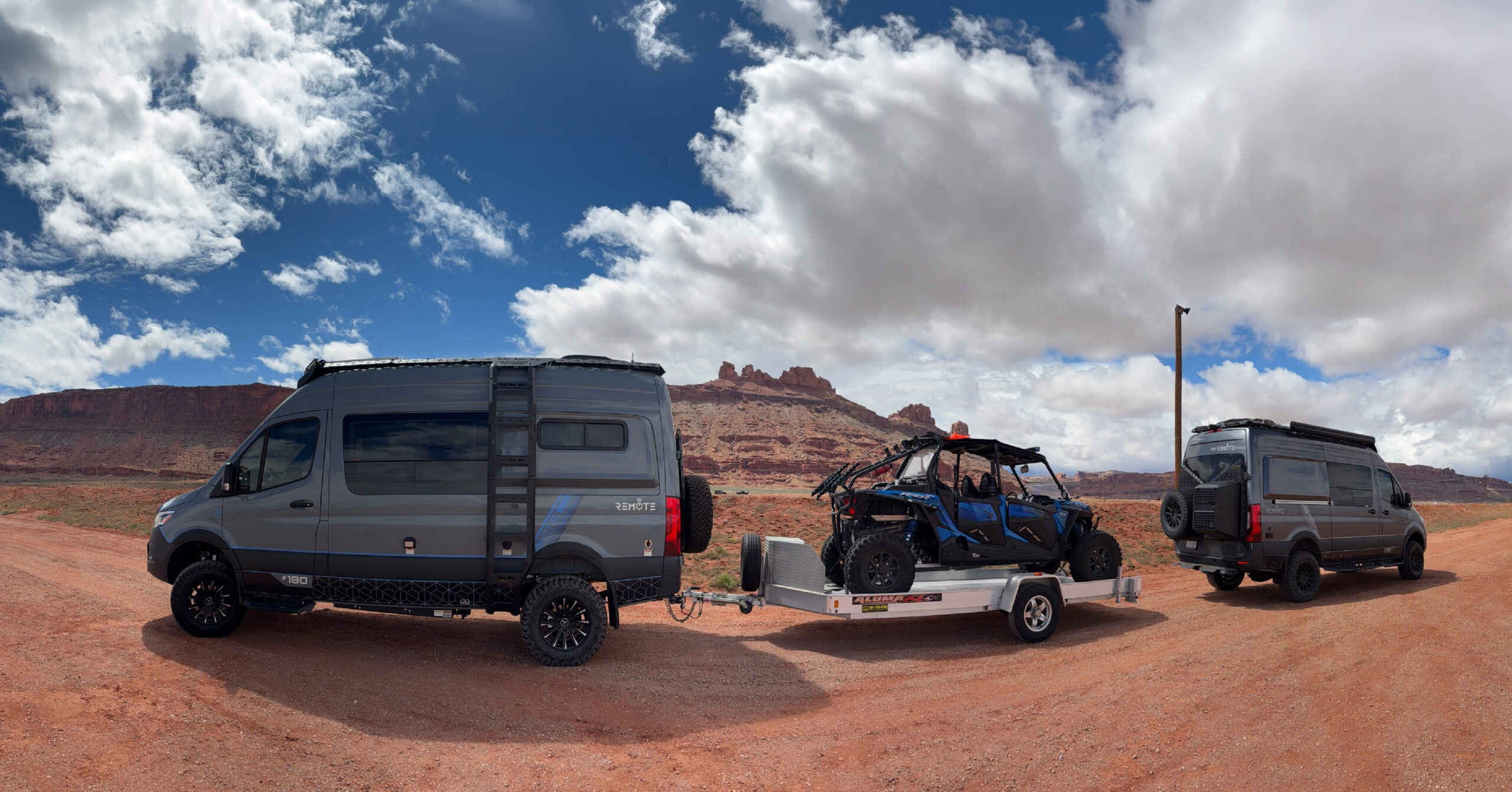
The reason is not complicated. Class B vans park in a regular space. They drive like a large van, which most people can handle on a standard license, without the stress of manoeuvring a 35-foot rig into a national park campsite. They can go where most other RV types cannot reach, on forest service roads, BLM land, backcountry pullouts that require nothing more than a confident driver and a van that fits. And in the hands of a builder who takes the challenge seriously, they deliver genuine off-grid capability, a comfortable bed, a real kitchen, a functional bathroom, and connectivity systems that support a home office from a high desert mesa.
That combination of capability, size, and versatility is exactly what the fastest-growing segment of the RV market has decided it wants. And the buyers driving that growth tend to be people who research carefully before they commit.
If that describes you, read on.
The Class B landscape: what you are actually choosing between
Before evaluating specific vans, it helps to understand the spectrum. Not all Class B vans are built the same way, and the differences between a budget conversion and a purpose-built adventure van are substantial enough to determine whether you enjoy ownership or regret it.
| Class A | Class B (Adventure Van) | Class C | Travel Trailer | |
|---|---|---|---|---|
| Length | 30-45 ft | 19-24 ft | 24-35 ft | 15- 35 ft |
| License | CDL often needed | Standard auto | Standard auto | Standard auto |
| Fuel Economy | 6-10 mpg | 14-20 mpg | 10-14 mpg | Varies |
| Parks anywhere | No | Yes | Mostly | Needs tow vehicle |
| Off-road access | Very limited | Excellent | Limited | Very limited |
| Best for | Full time luxury | Adventure + travel | Families | Budget camping |
Within the Class B category itself, there is a wide range. At one end, you have basic conversion vans with modest power systems, simple layouts, and price points that reflect the limited investment in engineering. At the other end, you have purpose-built adventure vans from dedicated builders, with sophisticated 51V power architectures, multi-layer insulation systems, proprietary climate control, and the kind of build quality that holds up for 100,000 miles.
The gap between those two ends of the market is real. The question is knowing which end you are actually looking at when you visit a dealership.
The four systems that determine whether you love your van or sell it
I have spoken to enough van owners at the wrong end of this decision to know what the regrets sound like. They almost never involve the floor plan, the colour, or the brand logo on the side. They involve one of four things: power, climate, water, or connectivity. Get those four right and almost everything else is manageable. Get any one of them wrong and it will define your ownership experience in ways no amount of beautiful scenery will compensate for.
Power: The system most buyers underestimate
The power system is the heart of an adventure van. It determines how long you can stay off-grid, whether you can run the air conditioning through a hot night, whether your laptop and monitors stay charged through a full workday, and whether your fridge holds temperature over a multi-day desert boondocking trip.
There are three things worth understanding about van power systems before you compare brands.
Battery capacity measured in kWh, not just amp-hours. Amp-hours without voltage is a meaningless number for comparison purposes. A 12V system with 400Ah has 4.8 kWh of total capacity. A 51V system with 330Ah has 16.8 kWh. The second system stores three and a half times more energy, but comparing their amp-hour figures alone would not show you that. Always ask for the kWh figure and verify the voltage.
Lithium over AGM, without exception. AGM batteries can only safely discharge to 50% of capacity before cell degradation accelerates. Lithium batteries, specifically LiFePO4 chemistry, discharge safely to 20%. In practical terms: a 400Ah lithium bank gives you around 320Ah of usable energy. A 400Ah AGM bank gives you around 200Ah. For a serious off-grid user, that difference is the difference between a comfortable evening and a dark fridge.
Voltage architecture matters more than most people realise. The majority of Class B conversions run on 12V electrical systems. Remote Vans uses a 51V Lithionics architecture, paired with a 48V Nomadic Cooling air conditioning system. The result is air conditioning that runs up to three times longer on battery than a comparable 12V setup. For anyone spending summer nights in the Southwest or the South, this is not a minor detail.
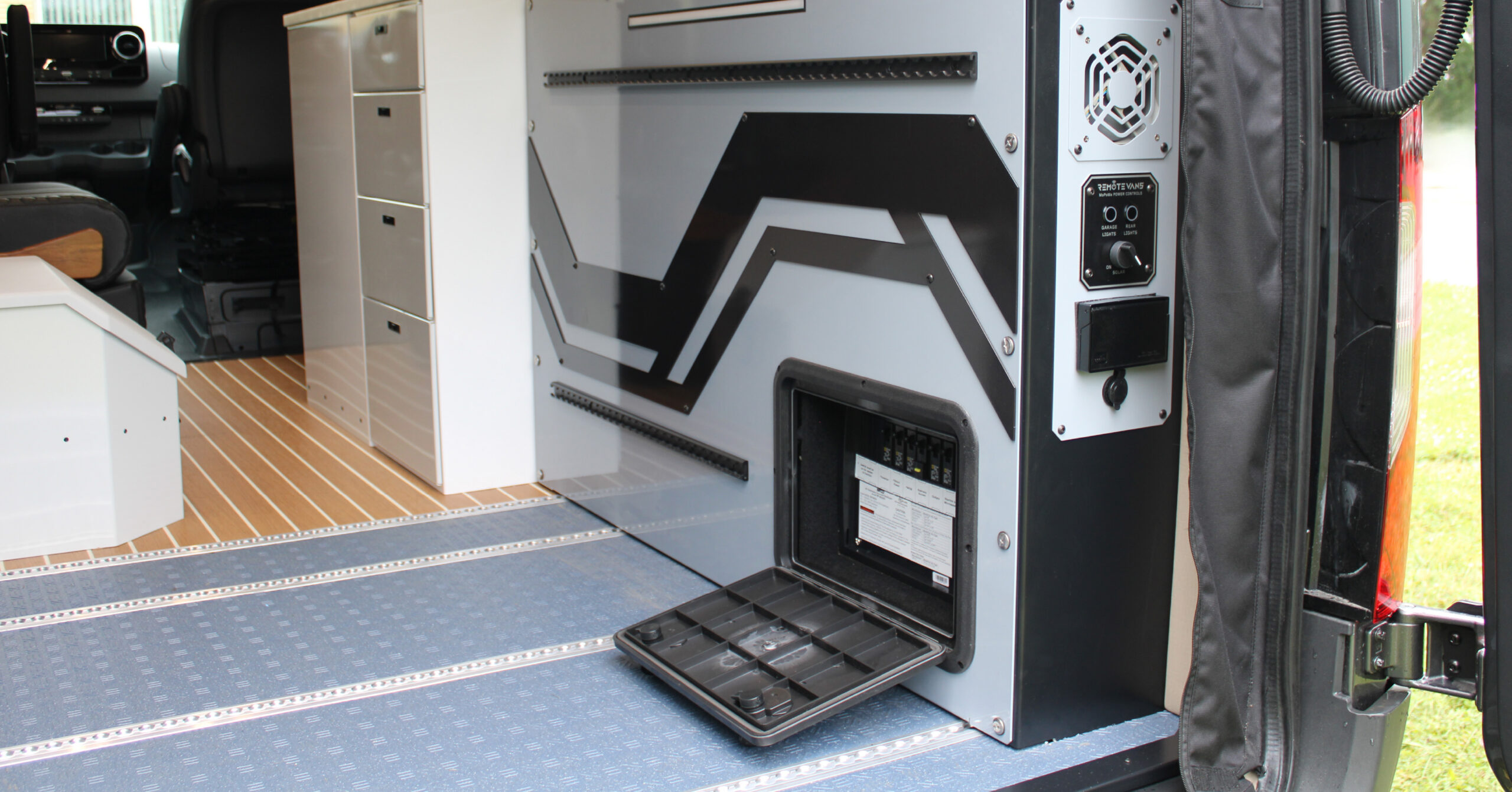
The Remote Vans MoPoWa Power System integrates three charging sources: shore power, roof-mounted solar, and a 48V 100A Lithionics generator alternator that rapid charges at any driving speed, not just highway speeds. In normal use, the combination keeps the battery bank comfortably topped up without any manual management.
Climate: four seasons is not a marketing phrase, it is an engineering claim
Every Class B van on the market will tell you it is four-season capable. What that actually means varies enormously.
Real four-season performance requires three things working together: proper insulation, a capable heating system, and sufficient battery capacity to run the cooling system off-grid for hours at a time.
Remote Vans uses a multi-layer insulation system: Kilmat sound deadening at the shell, Solarcore thermal insulation, and Havelock wool, a combination that was chosen for thermal performance and acoustic control together. The Rixen Hydronic Diesel/Electric system heats both air and water from a single diesel fuel source, which is more efficient than propane and does not produce the moisture that gas heating creates in a sealed space.
The 48V Nomadic Cooling A/C system scales with the series: two units in the T-45 and Friday, three in the Oasis and Aegis. If you are planning extended summer travel in heat, the Oasis and above give you the redundancy and runtime that one unit cannot.
Water: The detail that reveals build quality
Water systems are where budget conversions cut corners most aggressively, because buyers rarely think to ask about them during a walkthrough.
All Remote Vans carry a 30-gallon fresh water tank and a 24-gallon gray tank with a heating loop to prevent freezing in cold climates. The plumbing throughout uses PEX-A with compression and brass fittings, the same standard used in quality residential construction. This matters because push-fit plastic fittings, which are cheaper and faster to install, fail under the constant vibration and temperature cycling that van life subjects them to. Not immediately. But at mile 40,000, when you are somewhere without a service centre.
The Friday, Oasis, and Aegis include the Cyber Shower with recirculation, which reuses water through a filtration loop rather than draining straight to gray. In practice this means a ten-minute shower using under four gallons of water. For off-grid living, that is a meaningful capability.
Connectivity: The system that most builders still treat as an afterthought
The van life fantasy of working from a mountain top is no longer a fantasy. But it requires a van that was engineered for connectivity from the ground up, not one where a Starlink dish was bolted on after the fact.
Every Remote Van is Starlink-ready. The Friday includes Starlink Mini as standard. The Oasis includes the Starlink Standard dish. The Aegis runs High-Performance Starlink. The power system is sized to run Starlink continuously, which draws roughly 25-40W at all times, alongside a full workstation setup without strain.
The Pennyworth Van Control System, a dual-touchscreen interface in the Oasis and Aegis and a single screen in the T-45 and Friday, manages power state, water levels, climate, and connectivity from a single display. For a remote worker who needs to know their battery state before a video call, that integration matters.

Matching the van to your actual life
The most expensive mistake in adventure van buying is choosing a van for the travel life you imagine rather than the one you will actually live. Here is the honest version of the four profiles that Remote Vans sees most often.
| Travel Profile | What you actually need | Best fit in the 2026 lineup |
|---|---|---|
| Weekend Warrior | Nimble, full amenities, easy to park and drive, ready at short notice for 1-5 day trips | T-45 ($174,900): Compact, full spec, the right entry point |
| Part-time remote worker | Starlink, dedicated workspace, 16.8 kWh for all-day power, alpine sound, upgraded climate and suspension | Friday ($194,900) : Starlink Mini included, premium workspace design |
| Seasonal traveller | 3-5 months on the road per year, serious off-grid power, alpine sound, upgraded climate and supsension | Oasis ($224,900): the most popular series, built for couples on extended trips |
| Full-timer | This is home. Every system at maximum spec, built to last 100,000+ miles without compromise | Aegis ($247,900): flagship, 13 accessories, inverted rally struts, full exterior lighting |
Most Remote Vans owners are couples aged 55 to 72. Many travel for 4 to 8 months a year, splitting time between a home base and the road. A few go full-time. What almost all of them say, when you ask what they would do differently, is the same thing: they wish they had started sooner.
The practical implication: be honest about which category you are actually in, not the most aspirational version of it. The T-45 at $174,900 is not a compromise. It is a genuine, fully equipped adventure van that will handle everything a weekend warrior and occasional extended traveller needs. Buying an Aegis because you hope you will go full-time, when you are realistically a seasonal traveller, is overcapitalising. The other direction, buying a T-45 when you know you want 5 months off-grid in summer heat, is under-speccing a system that will frustrate you.
| The free Complete Class B Camper Van Buyer’s Guide has a more detailed version of this profile guide, alongside the full spec comparison table covering every component across all four 2026 series. Download it at [link to buyer’s guide] before your first dealer conversation. |
What RVIA accreditation actually means (and why you should care)
RVIA accreditation is one of those details that sophisticated buyers ask about and first-time buyers never think to mention. It is worth understanding before you start comparing brands.
The Recreation Vehicle Industry Association sets and enforces safety standards covering electrical systems, structural integrity, gas systems, plumbing, fire safety, and more. An RVIA-accredited builder has been independently inspected and verified to meet those standards on every build, not once at certification, but on an ongoing basis. It is a meaningful quality signal because the process is genuinely demanding and expensive. Not all Class B builders hold it.
Remote Vans is RVIA accredited. Every van in the 2026 lineup, T-45, Friday, Oasis, and Aegis, is built to RVIA standards at the Remote Vans facility in Cincinnati, Ohio.
Beyond the safety implications, RVIA certification has two practical financial effects worth knowing:
- RVIA-certified vehicles qualify for dedicated RV loans with significantly better terms than personal or auto loans, including the 20-year repayment periods that change the monthly payment calculation entirely.
- Most RV-specific insurance products require RVIA certification. Without it, you are working with standard vehicle insurance that does not cover habitation systems.
| Remote Vans has been RVIA accredited since the company launched. It is not a recent addition or a marketing claim. It is a standard that every van built in Cincinnati is independently verified against. |
The real financial picture: How the monthly payments actually work
The price tag on a premium Class B van, $174,900 to $247,900, is the number that stops a lot of serious buyers before they have had a chance to run the actual numbers. Here is the thing most people do not know until they start talking to a dealer: RV financing works nothing like car financing.
RV loans are classified as recreational vehicle loans, and they can extend to 20 years or more. That single fact changes the calculation completely. Here is what the monthly payments actually look like at approximately 7% APR with 10% down:
| Van / Price | 10% down | Loan amount | 15-yr at 7 % APR | 20-yr at 7% APR |
|---|---|---|---|---|
| T-45 $174,900 | $17,490 | $157,410 | $1,415/mo | $1,220/mo |
| Friday $194,900 | $19,490 | $175,410 | $1,575/mo | $1,360/mo |
| Oasis $224,900 | $22,490 | $202,410 | $1,818/mo | $1,570/mo |
| Aegis $247,900 | $24,790 | $223,110 | $2,004/mo0 | $1,729/mo |
Estimates only. Actual rates vary by lender, credit profile, and term. Remote Vans dealer partners work with multiple specialist RV lenders and can get you pre-qualified quickly.
Now put that monthly figure alongside what travel costs look like without a van. A couple travelling for four months a year, at a conservative $180 per night in hotels, plus flights, rental cars, and the restaurant bills that come with not having a kitchen, reaches $20,000 to $30,000 in annual travel spend without difficulty. The van does not add to that cost. It replaces it.
Most Remote Vans owners report that their total travel spending either holds steady or decreases in the first year. When home comes with you, spontaneous road trips cost almost nothing. The van paid for itself in hotels and rental cars, in the words of most owners, within three years.
RV loan interest may also be tax-deductible as a second home mortgage. Your tax adviser can confirm what applies to your specific situation.
The 7 questions to ask any dealer before you commit
These questions come straight from Remote Vans’ own buyer’s guide. We include them here because they apply to any Class B brand you evaluate, including ours. A dealer who cannot answer all seven clearly and confidently is telling you something.
1. What does the warranty actually cover, and for how long?
Ask specifically about the chassis warranty, the conversion components, appliances, and electrical systems separately. Find out who handles warranty work outside the selling dealer’s region, because you will not always be near the dealership when something needs attention.
2. What is the real off-grid capability?
Ask for specific numbers: kWh of battery storage, not just amp-hours, and documented A/C runtime on battery with no solar or shore power input. If they cannot give you a specific number on that last question, they do not know, or the number is not impressive.
3. How does the solar and battery system work?
Understand the battery chemistry (lithium or AGM), the voltage architecture (12V or higher), solar wattage, and whether the alternator charges meaningfully at low speeds. These are the details that determine real-world off-grid performance.
4. What is included in the price, and what costs extra?
Get an itemised breakdown. Some brands lead with an attractive entry price and then layer in accessories that add up significantly. Remote Vans uses see-through, no-haggle pricing: the price listed is the price you pay, with no negotiation and no surprises. Not every brand operates this way.
5. Who services the van, and where?
For a vehicle you will drive 15,000+ miles a year across the country, knowing there is a service network beyond the selling dealer is not optional. Ask for specifics.
6. Can I speak to current owners or see unfiltered reviews?
A brand that is confident in its product will point you straight to an active, public owner community. The Rolling Nomads Facebook group, which is Remote Vans’ owner community of over 200 people, is public and completely unmoderated by Remote Vans. Everything in it is genuine.
7. What happens if I need help on the road?
Roadside assistance, remote troubleshooting, emergency support. Know what the backup looks like before you need it. The answer to this question is what gives you the confidence to park somewhere genuinely remote.
| Remote Vans answers all seven of these questions with zero hesitation, in the buyer’s guide and in any dealer conversation. We actively encourage buyers to ask them of every brand they are considering, including us. |
What experienced owners say
Specs and claims are one thing. The people who have been living with these vans for a year or two or three are a more useful data point. Here is an unfiltered sample from the Rolling Nomads community.
| “I bought mine in 2023 and my van continues to be the top spec even almost two years later. They took the best from all other leading up-fitters and added their own ingenuity.”
Michael K., Remote Vans Owner #33 |
| “Large manufacturers do not provide the customer support that Remote Vans does. This was confirmed by the prep tech at the dealership I purchased mine from.”
Rob P., Remote Vans Owner #47 |
| “Quality, quality. Couldn’t really find a comparable once I found Remote Vans.”
Darren S., Remote Vans Owner #87 |

How to take the next step
If you are at the point in your research where you want to move from information to conversation, here is how the process works with Remote Vans.
1. Submit a Van Inquiry at remotevans.com/van-inquiry. Tell us which series interests you and your state. We connect you with your nearest authorised dealer, typically within one business day.
2. Talk to your dealer. No sales pressure, no haggling. They will walk you through the lineup, answer every question you have, and arrange a walkthrough of the van that fits your travel profile.
3. Arrange financing if needed. Your dealer works with multiple specialist RV lenders and can often get you pre-qualified the same day. Knowing your actual numbers makes the decision considerably clearer.
4. Take delivery and start moving. Your dealer walks you through every system before you drive off. After that, you are a Rolling Nomad, and the road is yours.
| Before your first dealer conversation, download the free Complete Class B Camper Van Buyer’s Guide . It has the full series comparison table, the complete spec breakdown for all four 2026 vans, real financing examples, and the 7 dealer questions in a format you can bring with you. It is yours to keep, share with your travel partner, and use when comparing vans at a show. |
|
Financing estimates are for illustrative purposes only. Actual rates, terms and monthly payments will vary based on creditworthiness, loan term and lender. Contact your nearest Remote Vans dealer for personalised financing options and pre-qualification.