 Off-Grid Power Systems Explained: Solar, Lithium, and Inverters for Van Life
Most people shopping for an adventure van spend the most time thinking about the floor plan. The bed. The shower. The kitchen layout. Whether the colour is right.
And then they get on the road, spend three days boondocking in July with no shore power, and discover the thing that actually determines whether van life works for them.
Power.
Specifically: how much battery capacity the van has, what type of batteries, whether the solar system can keep pace with their daily usage, and whether the air conditioning can run through the night without draining everything by 2am.
These are the questions that separate a van that delivers the lifestyle from one that tethers you to campground hookups. And the answers vary enormously across the Class B market.
This guide explains all of it in plain language: what the specs mean, what to actually look for, and how Remote Vans have approached the power problem differently from most other builders.
Why power is the most important system in your van
Think about everything you rely on electricity for in daily life. Charging your laptop and phone. Running a fridge. Heating or cooling the space you are sleeping in. Lighting. A water pump. A coffee maker. If you plan to work remotely, add monitors, a router, and possibly a docking station.
Now put all of that in a vehicle that is parked somewhere with no electrical hookup, possibly for several days at a time.
That is the off-grid power challenge. And it is the thing most manufacturers under-engineer, because bigger battery systems cost more money and eat into margin.
The buyers who end up unhappy with their van almost always cite the same things: the air conditioning runs out before morning, the fridge draws down the battery faster than solar can replace it, or the van dies on a cloudy week. These are power system failures, not lifestyle failures.
Getting the power right from the start is the single most important decision you will make when choosing an adventure van.
The three components that make up a van power system
Every off-grid power system in a camper van has three core components: the battery bank, the solar panels, and the inverter. They work together as a system, and the weakest link determines how the whole thing performs.
The battery bank
Your battery bank is your energy reserve. It stores power that comes in from solar, shore hookup, or the alternator while driving, and it supplies that power to everything running in the van.
Battery capacity is measured in two ways: amp-hours (Ah) and kilowatt-hours (kWh). Kilowatt-hours is more useful for real-world comparison because it accounts for voltage. The formula is straightforward: volts multiplied by amp-hours divided by 1,000 gives you kWh. A 51V system with a 330Ah bank delivers 16.8 kWh. A 12V system with the same 330Ah bank delivers only 4 kWh. Same amp-hours, very different energy storage.
This matters enormously when comparing vans, because manufacturers sometimes advertise amp-hours without specifying voltage, which makes a $90,000 budget conversion look better-specced than it is.
Lithium vs AGM: the most important battery decision you will make
Most budget van conversions use AGM (Absorbent Glass Mat) batteries. Most premium conversions, including all Remote Vans, use lithium. The difference matters more than most buyers realise.
| Lithium (LiFePO4) | AGM | |
|---|---|---|
| Safe discharge depth | 80% (down to 20% remaining | 50% (any deeper damages cells) |
| Usable energy (400Ah bank) | -320Ah usable | -200Ah usable |
| Weight | 30-50% lighter | Heavy |
| lifespan (charge cycles) | 3,000-5,000 + cycles | 300-500 cycles |
| Charge speed | Fast, accepts high charge rates | slow, sensitive to overcharging |
| Performance in cold | Good with heated battery systems | Degrades significantly below freezing |
| Cost | Higher upfront | Lower upfront |
The key number here is usable energy. A 400Ah AGM bank gives you around 200Ah of usable capacity before you start damaging the cells. A 400Ah lithium bank gives you around 320Ah. For a remote worker running a laptop, two monitors, a fridge, lighting, and climate control all day, the difference between 200Ah and 320Ah is the difference between a full working day and running out by mid-afternoon.
Over the lifetime of the battery, lithium also wins decisively on cost. AGM batteries need replacing every 2 to 3 years under heavy use. A quality lithium bank, properly managed, will outlast the van.
The 48V advantage: why voltage architecture matters
Most Class B vans run on a 12V electrical system. Remote Vans uses a 51V architecture in the Oasis and Aegis series, and the difference is significant.
Higher voltage systems move the same amount of power through thinner wires, with less heat and less energy loss. More importantly, higher voltage enables more powerful components to run more efficiently. The 48V Nomadic Cooling air conditioning system that Remote Vans pairs with its 51V Lithionics battery delivers up to three times more runtime on battery than a comparable 12V A/C setup.
In practical terms: in summer heat in Arizona or Texas, a 12V van A/C system might run for 3 to 4 hours on battery before the bank is too depleted to continue. The 48V system in the Oasis and Aegis runs through the night.
This is one of those specs that does not show up in a brochure walkthrough but becomes the defining feature of your experience six months into full-time ownership.
Solar panels
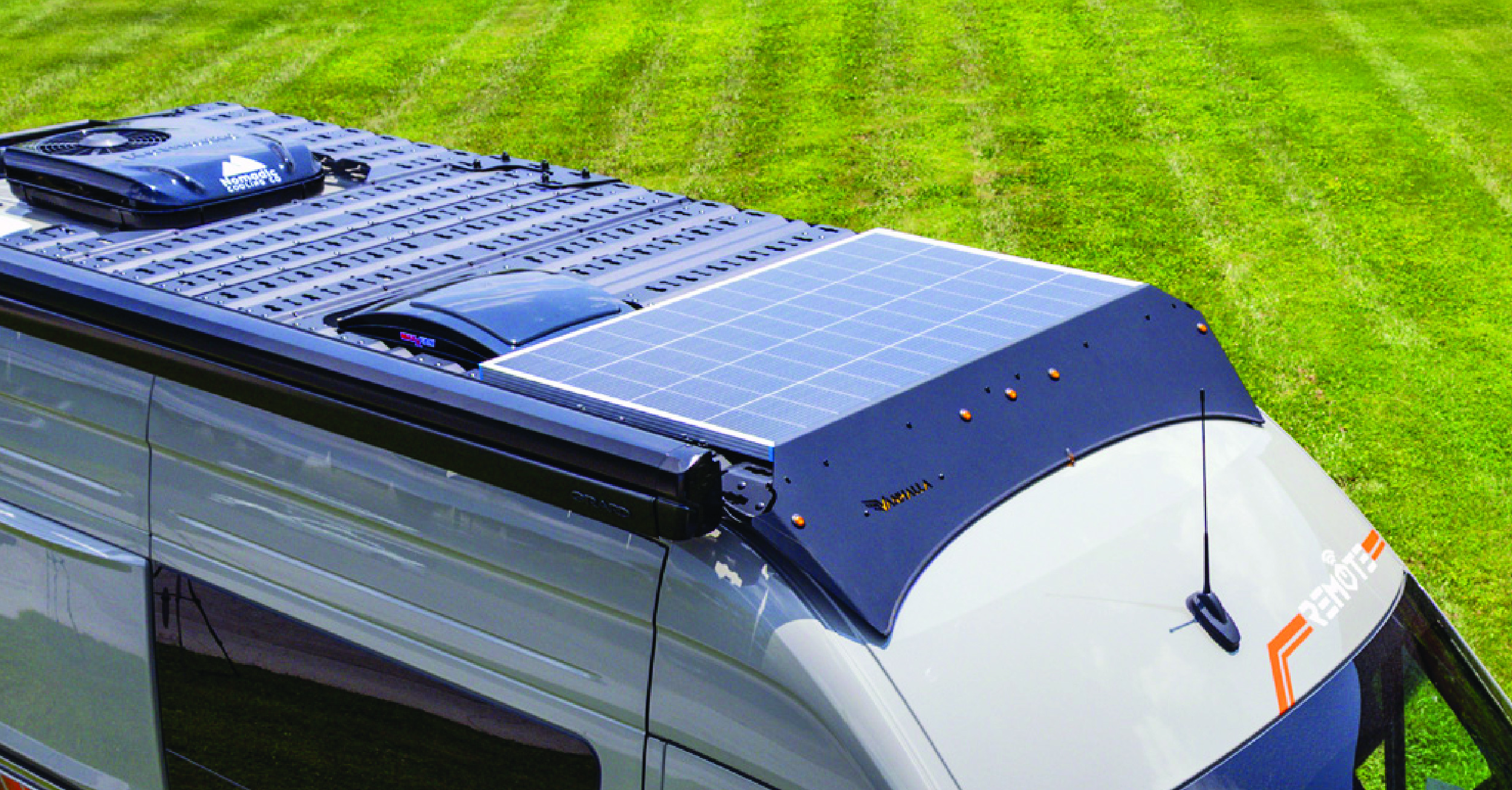
Solar is your primary charging source when you are off-grid and not driving. The basic principle is straightforward: panels on the roof convert sunlight into electricity, which flows through a charge controller into your battery bank.
Solar panel capacity is measured in watts. A single 200W panel, under ideal conditions, can produce around 1 kWh of energy per day. In practice, accounting for cloud cover, panel angle, temperature, and daylight hours, real-world output is typically 50 to 70% of rated capacity.
This means a 200W panel realistically produces around 100 to 140Wh per day in average conditions. A 400W system produces 200 to 280Wh. For a van consuming 800 to 1,500Wh per day under typical usage, solar alone will rarely keep pace. It supplements battery capacity rather than replacing it.
All Remote Vans in the 2026 lineup include a 200W solar panel as standard. For heavier users, the roof L-track system allows additional panels to be added without drilling. Many Oasis and Aegis owners add a second 200W panel as their first upgrade after delivery.
The inverter
Your battery bank stores power as DC (direct current). Most household appliances, including laptops, monitors, coffee machines, and microwaves, run on AC (alternating current). The inverter converts DC power from your batteries into AC power for your appliances.
Inverter size is measured in watts and refers to the maximum load it can handle at once. A 2,000W inverter can run a laptop, a monitor, a coffee machine, and a microwave simultaneously without issue. An 800W inverter cannot.
Remote Vans runs a 3,000W inverter across the Oasis and Aegis series, which handles the demands of a full home office setup with room to spare. The T-45 and Friday run a 2,000W inverter, which is sufficient for most users who are not running simultaneous high-draw appliances.
How much power do you actually need? A real-world guide
The most useful thing you can do before comparing van power systems is to calculate your own daily energy budget. Here is a straightforward way to do it.
List every device you plan to run in the van, its wattage, and how many hours per day you will run it. Multiply watts by hours to get watt-hours. Add everything up for your daily total.
| Device | Typical draw (watts) | Daily hours | Daily Usage (wh) |
|---|---|---|---|
| Laptop | 30-65W | 8 hrs | 240-520 Wh |
| External Monitor (27 inch) | 25-40W | 8 hrs | 200-320 Wh |
| Starlink Mini | 25-40W | 24 hrs (always on) | 600-960 Wh |
| Fridge/Freezer | 30-50W (cycling) | 24 hrs cycling | 200-350 Wh |
| LED lighting | 10-20W | 4 hrs | 40-80 Wh |
| Phone charging x2 | 10-20W | 2 hrs each | 40-80 Wh |
| 48v A/C ( Nomadic Cooling) | 600-900W | 4-8 hrs | 2,400-7,200 Wh |
| Diesel heater ( Rixen hydronic) | 600-900W | 8 Hrs | 40-160 Wh |
| Total (work setup, no A/C) | 1,320-2,310 Wh | ||
| Total (work setup, with A/C 4 hrs) | 3,720-9,510 Wh |
A few things jump out from this table immediately. First, Starlink running continuously is a meaningful constant draw, around 700 to 900Wh per day. Second, air conditioning dwarfs everything else. Running A/C for 8 hours can consume more power than everything else in the van combined. Third, a typical remote work setup without A/C needs around 1,500 to 2,000Wh per day of battery capacity to run comfortably.
This is why the 16.8 kWh battery system in the Friday, Oasis, and Aegis matters so much in practice. At 16.8 kWh of usable lithium capacity, you have roughly 8 to 10 days of remote work usage before needing to recharge, assuming no solar input and no alternator charging. In reality, solar and driving charging bring that number down to near-zero depletion under normal use.
The T-45 at 8.4 kWh is well-suited to weekend and occasional use where A/C demands are lighter and trips are shorter. It is not the right system for a full-time remote worker in a hot climate.
The three ways Remote Vans charge your battery
The MoPoWa Power System in every Remote Van supports three independent charging sources, which is one of the things that sets it apart from simpler setups.
- Shore power: A standard hookup at a campsite or RV park. Shore power is the fastest and most reliable way to top up the battery bank. Every Remote Van comes with a shore power cable and input port as standard.
- Alternator charging: The 48V 100A Lithionics Generator Alternator charges the battery while you are driving, at any speed. This is a meaningful difference from standard alternator setups, which typically only produce useful charge at highway speeds. Driving a short distance to your next campsite will put a real dent in your daily energy deficit.
- Solar: The 200W roof panel provides passive charging whenever there is daylight. In summer at lower latitudes, this can supply a significant portion of daily needs. In winter or overcast climates, it supplements rather than supplies.
The combination of all three means that in normal use, most Remote Vans owners rarely see their battery drop below 50%, even running a full workstation setup and climate control. The system is designed so that ordinary daily life, a bit of driving, some sunlight, and occasional shore power hookups, keeps the bank topped up without any manual management.
| T-45 | Friday | Oasis | Aegis | |
|---|---|---|---|---|
| Battery System | 51V Lithionics | 51V Lithionics | 51V Lithionics | 51V Lithioncis |
| Battery Capacity | 8.4KWh | 16.8 kWh | 16.8 kWh | 16.8 kWh |
| A/C Units | 2x 48V | 2x 48V | 3x 48V | 3x 48v |
| Solar | 200W | 200W | 200W | 200W |
| Alternator | 48V 100A | 48V 100A | 48V 100A | 48V 100a |
| Starlink | Compatible (not included) | Mini (included) | (Standard (included) | High Performance (included) |
| Heating (Rixen hydronic ) | 1 Blower | 1 Blower | Main + Rear | Main + rear |
Every van in the lineup runs the same 51V Lithionics architecture and the same 48V charging infrastructure. The step up from T-45 to Friday is primarily battery capacity. The step up from Friday to Oasis adds a third A/C unit, upgraded suspension, and additional exterior systems. The Aegis is the full flagship built on top of the Oasis platform.
What questions to ask when comparing power systems across brands
When you are evaluating any Class B van from any manufacturer, these are the power system questions worth getting specific answers to before you commit:
1. What is the battery capacity in kWh, not just amp-hours? Ask for both the voltage and the amp-hour figure so you can calculate kWh yourself if needed.
2. Are the batteries lithium or AGM? If lithium, what chemistry? LiFePO4 (lithium iron phosphate) is the safest and most stable for van applications.
3. What is the inverter size in watts? Will it run A/C, a microwave, and a laptop simultaneously?
4. What is the solar panel wattage, and is the roof set up for additional panels?
5. How does the alternator charging work? Does it charge at low speeds or only at highway speeds?
6. What is the documented A/C runtime on battery only, with no solar or shore power input?
Question 6 is the one most manufacturers cannot answer with a specific number. If they give you a vague answer, that tells you something.
The honest answer on power: What you need for your travel style
For weekend warriors and occasional travellers in mild climates: the T-45 at 8.4 kWh is more than adequate. Most weekend trips involve some driving (alternator charging), some daylight (solar), and occasional campsite hookups. You will not run out of power.
For part-time remote workers and frequent travellers: The Friday’s 16.8 kWh system is the right baseline. Running a laptop workstation, Starlink, and a fridge all day for several days between charges requires headroom that 8.4 kWh does not reliably provide.
For seasonal travellers covering 3 to 5 months a year: the Oasis brings the third A/C unit that makes a real difference in hot climates. If you are spending August in Texas or September in the desert Southwest, the difference between two and three 48V A/C units matters for overnight comfort.
For full-timers in all climates and conditions: the Aegis is the answer. 16.8 kWh, three A/C units, the most capable suspension for getting to remote sites, and the complete exterior accessory package. It is built for the person who needs the van to perform every single day, in every condition, without compromise.
| Not sure which power system is right for your travel style? The Compare Vans page at has the full spec breakdown side by side. Or download the Complete Class B Buyer’s Guide at [link] for the full picture including financing options. |
A note on the MoPoWa system: what makes it different
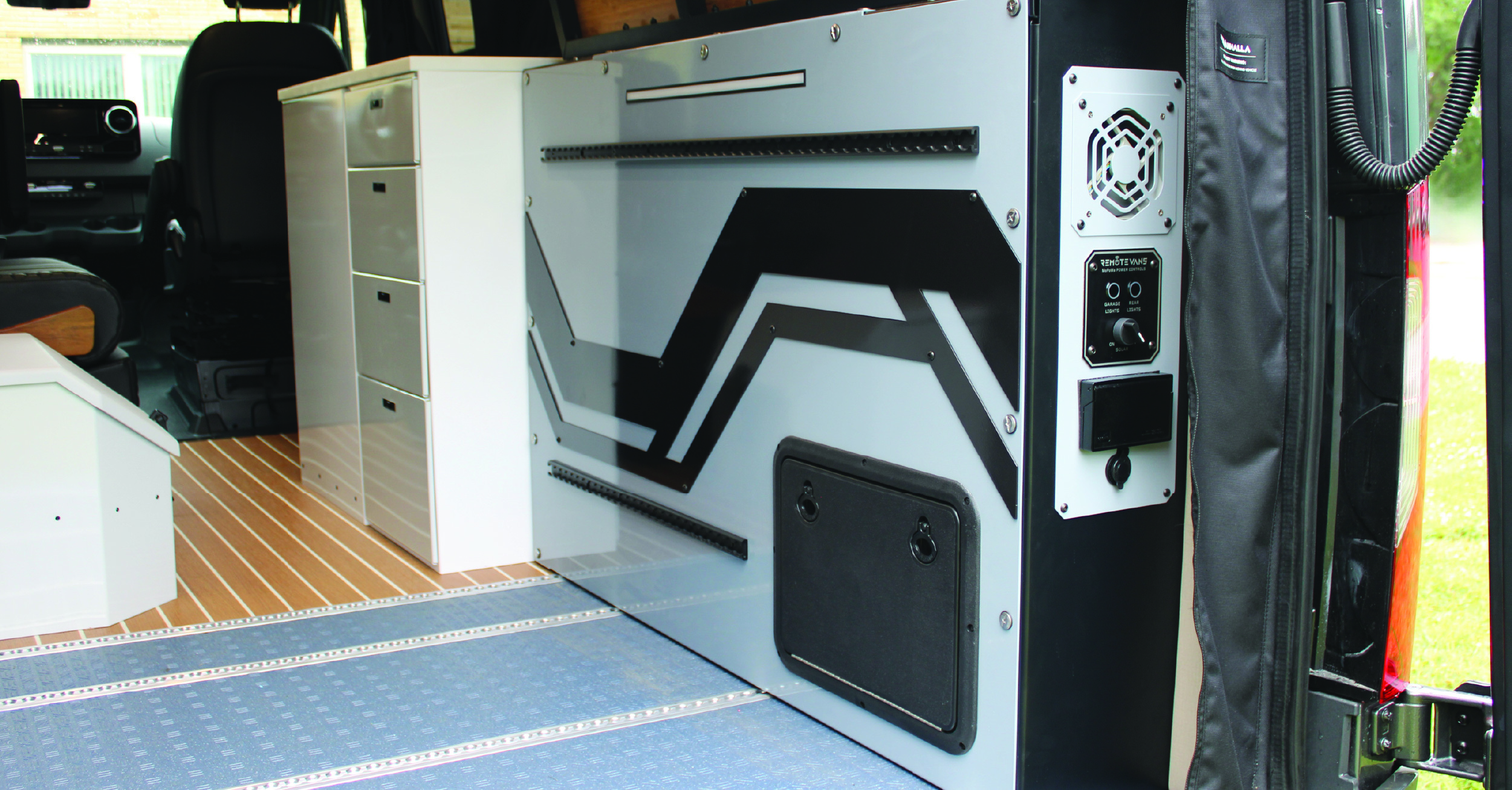
Remote Vans uses the name MoPoWa for the proprietary power and water system that is integrated into every van. It is not just a battery and some wiring. It is a fully designed system where the power, water, and climate components are engineered to work together from the ground up.
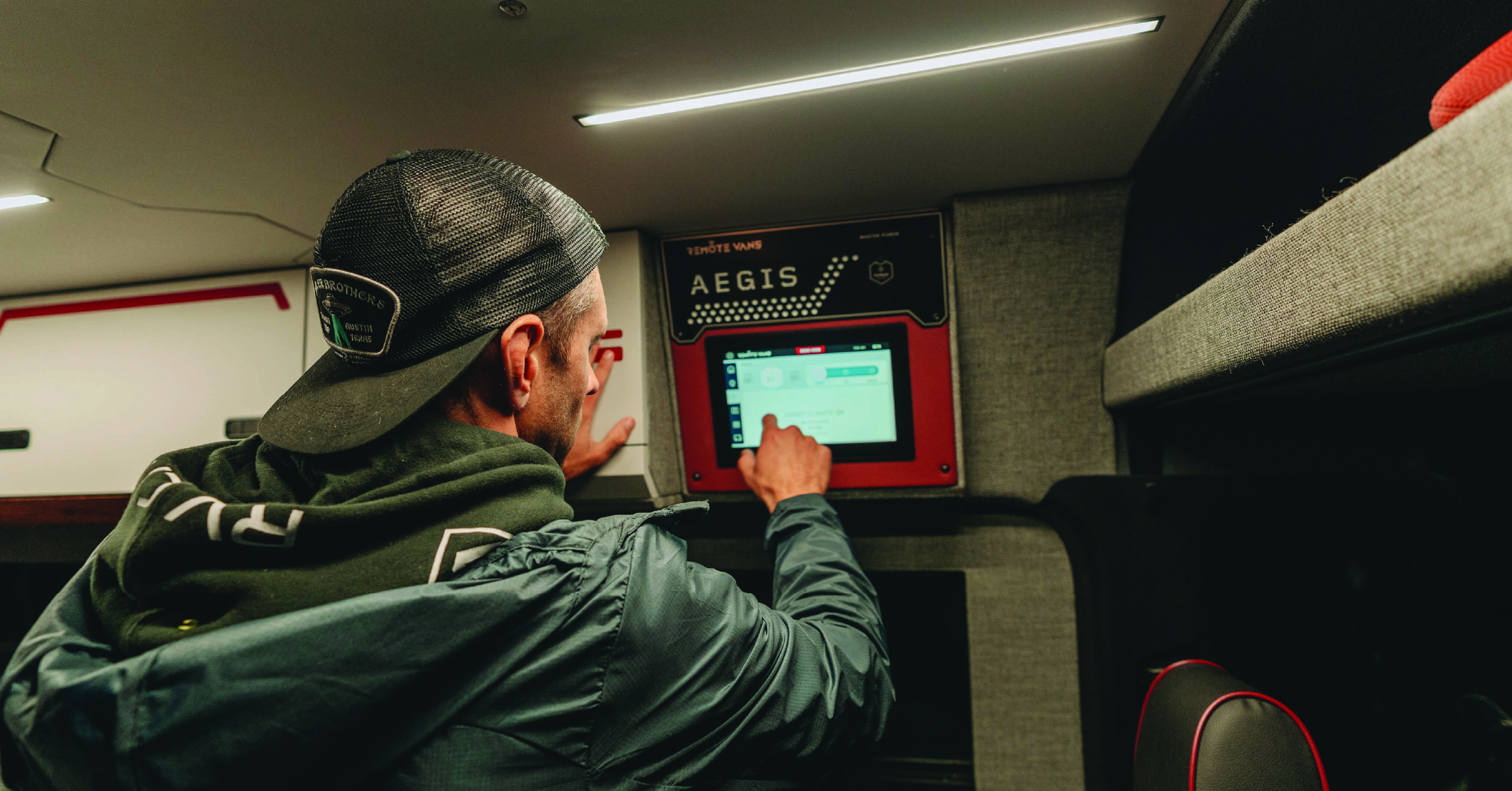
The MoPoWa housing in the garage area holds the 51V Lithionics battery bank and the water system in an accessible, organised unit with its own lighting and L-track for securing gear around it. The Pennyworth Van Control System, the 11-inch touchscreen standard in the T-45 and Friday and the dual 11-inch plus 5-inch screens in the Oasis and Aegis, gives you a single interface for monitoring battery state, solar input, water levels, and climate settings.
This matters because in most van conversions, these systems are cobbled together from separate components with separate interfaces. Knowing your exact battery state, how much solar is coming in, and how long you can run the A/C before you need to drive or hook up requires checking three different displays or doing mental arithmetic. In a Remote Van, it is one screen.
| “Because the battery system is so large, I never have to worry about my computer dying. And on top of that, I can run the A/C or the heater. The power system really allows the van to be the perfect mobile office.”
Rolling Nomads owner, Remote Vans Oasis |
The bottom line on van power systems
Power is not the glamorous part of adventure van ownership. Nobody posts Instagram photos of their battery monitor. But it is the system that determines whether you can work from a canyon in Utah without driving to a campsite every two days, whether you sleep comfortably in August, and whether your van actually delivers the lifestyle it promises.
The things to remember when you are comparing vans:
- kWh is the number that matters, not amp-hours alone. Calculate it yourself if manufacturers only quote amp-hours.
- Lithium beats AGM on usable capacity, lifespan, and real-world performance. The upfront cost difference disappears quickly.
- Higher voltage systems (48V and 51V) run more efficiently and enable more capable A/C systems than 12V setups.
- Three charging sources (solar, shore power, alternator) give you genuine redundancy and independence.
- The A/C runtime on battery, with no solar or shore power, is the single most revealing spec for understanding real off-grid capability.
Ask the questions. Get the numbers. Then compare.
| Explore the Remote Vans power specs across all four 2026 series at remotevans.com/compare-adventure-vans. Or submit a Van Inquiry at remotevans.com/van-inquiry and we will connect you with a dealer who can walk you through the system in person. |